
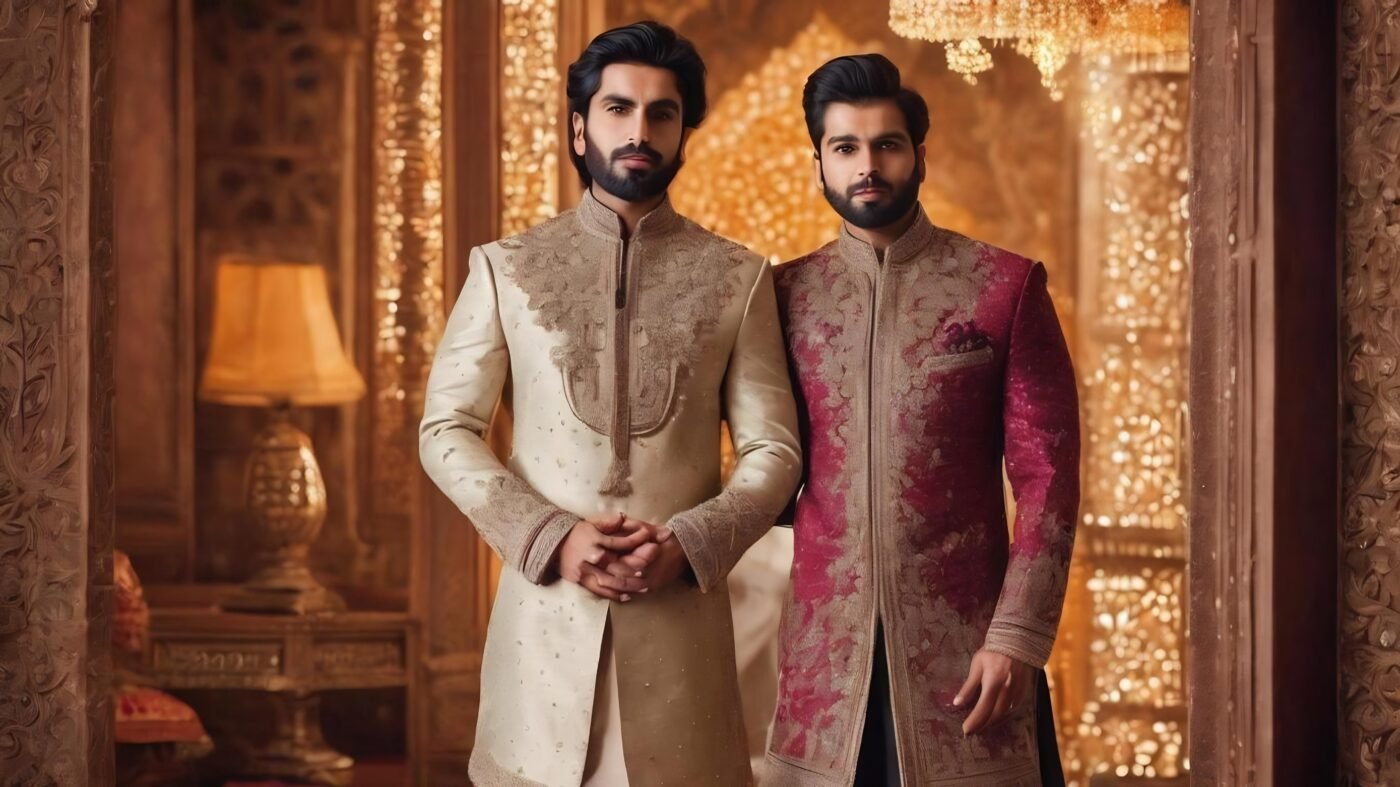
Sherwani for Men : Your Ultimate Style for UK Desi Gents
Right then, gentlemen of the UK, let's delve into sartorial matters of considerable import! I speak, of course, of the Sherwani for Men – that most magnificent of garments. For those of Indian or Pakistani descent residing on these isles, it transcends mere clothing.
It's a proclamation, a tangible link to ancestral homelands, and, if I may be so bold, a rather dashing sartorial flourish. But what precisely is this remarkable raiment? What are its origins? And what currents are shaping its trajectory within the UK's vibrant desi fashion landscape? Prepare to dissect its history, disentangle prevailing trends, and perhaps even ponder a cultural conundrum or two.
1. What's a Sherwani Anyway? Your Go-To for Regal Swagger
Picture, if you will, a coat of considerable length, meticulously tailored, exuding an air of undeniable refinement. The sherwani, dear chaps, is a traditional outer garment for men, typically extending below the knees, fastened at the front with buttons, and often featuring a nipped-in waist that whispers of 'gentlemanly distinction'. Across South Asia, it reigns supreme as the quintessential power outfit for formal occasions, instantly bestowing an aura of royalty upon the wearer.
The Lowdown:
Look & Feel: A streamlined, structured coat that conveys purpose (albeit of a celebratory nature!).
Fabric Love: Think sumptuous silks, opulent velvets, intricate brocades – though lighter linens and cottons may also grace the scene, offering respite from warmer climes.
Collar Game: The sharp stand-up Mandarin collar (the 'Bandhgala') is a frequent, though not invariable, feature.
Underneath It All: Convention dictates pairing it with a kurta, accompanied by churidars or pyjamas (in India) or shalwar (favoured in Pakistan and Bangladesh).
Why It's Special: It embodies more than mere threads; it speaks of dignity, adherence to etiquette, and a deep-seated cultural pride woven into every seam. Did you know, for instance, that it serves as Pakistan's national attire for men?
2. From Persian Capes to British Frock Coats: A History of High Fashion
This, my friends, is no fleeting fad. The sherwani for men boasts a history as rich and multifaceted as its most elaborate embroidery!
Ancient Roots: Its lineage traces back to Persian capes (the 'balaba' or 'chapkan,' for example) and the Mughal-era Indian 'angarkha' or 'achkan' during the 12th-18th centuries. A heritage steeped in time!
The British Influence (19th Century): Sherwani for Men as we recognize it today truly flourished during the 19th century, in the crucible of British India. A masterful fusion, taking the traditional Indian 'achkan' and grafting onto it the structured, button-down front inspired by European frock coats. Lucknow, around 1820, served as its birthplace.
Status Symbol: Initially, it was the formal attire of Mughal nobles, Muslim aristocrats, and royalty – a potent symbol of elevated status and cultivated taste.
Post-Independence Pride: In the aftermath of 1947, it evolved into a symbol of national identity. Witness Muhammad Ali Jinnah donning it with evident pride in Pakistan, and Jawaharlal Nehru popularizing a shorter iteration (the Nehru jacket) in India. It is, undeniably, a garment intertwined with both heritage and nation-building!
3. Sherwanis in the UK: Bridging Cultures, Setting Trends
For Indian and Pakistani men in the UK, the sherwani transcends mere fashion; it represents a vibrant connection to their cultural heritage, particularly during the grand spectacle of family weddings and celebratory gatherings.
UK Desi Weddings: The Main Stage: British South Asian weddings provide the Sherwani for Men with its most resplendent showcase. Grooms, groomsmen, and even honored guests embrace its regal allure.
Expressing Roots: Wearing a sherwani in this context becomes a powerful affirmation of cultural identity, respect for tradition, and a tangible link to generations past.
What's Hot in the UK Right Now:
Indo-Western Fusion: This trend is currently dominating the scene! We see traditional sherwani elements interwoven with contemporary Western silhouettes – think asymmetrical hemlines, jacket-style sherwanis worn over kurtas, or modern trousers replacing traditional bottoms.
Achkan & Jodhpuri Styles: These remain popular choices, offering a more streamlined fit (Achkan) or that signature Bandhgala jacket aesthetic (Jodhpuri).
Fabric Frenzy: Velvet reigns supreme for winter weddings (evoking sheer opulence!), while linen and cotton blends offer a more breathable option for warmer months. Silks and brocades are, of course, timeless classics.
Colour Palette Expansion: Beyond the familiar ivory, maroon, and gold, we observe a surge in popularity for pastels (peach, mint green, powder blue), particularly suited for daytime affairs. Darker jewel tones (royal blue, emerald green, wine red) are making a statement for evening events. Black sherwanis, surprisingly, offer a sporty edge, ideal for receptions!
Embellishment Evolution: Intricate zari, zardozi, beads, and sequins still hold their place, but there's a growing movement towards more understated, minimalist designs that whisper of refined elegance.
Bespoke is Best: Custom-made sherwanis are highly coveted. UK designers and boutiques are adept at tailoring outfits to harmonize with wedding themes, individual tastes, and even coordinate with the bride's ensemble. A flawless fit, every single time! Data from 2024 indicates a 30% increase in bespoke sherwani orders in the UK, highlighting this growing preference for personalized attire.
4. The 'Appropriation' Question: Wearing it Right
With any artifact of cultural significance, the question of appreciation versus appropriation inevitably arises. Therefore, should your non-South Asian acquaintance wish to sport a sherwani at your wedding, what constitutes proper etiquette?
Appreciation is Key: The vast majority of South Asians genuinely welcome displays of appreciation when someone from another culture dons a sherwani respectfully. Especially if you're invited to a wedding where traditional attire is encouraged, it's typically perceived as a mark of respect and genuine interest.
Context Matters: Wearing a sherwani to a desi friend's wedding, where traditional dress is encouraged? That's appreciation. Employing it as a "costume" for Halloween or mocking its inherent significance? Decidedly not acceptable.
The Justin Trudeau Debate: Even high-profile figures, such as Canadian PM Justin Trudeau, have ignited global discourse with their sartorial choices. The general consensus tends towards viewing it as appreciation, provided it's executed respectfully and with understanding.
The Bottom Line: Intention and respect are paramount. If your motives are genuine, your understanding is evident, and you avoid exploiting or perpetuating stereotypes, you're generally on safe ground. And should uncertainty persist, consult your South Asian friends – they will undoubtedly be happy to offer guidance!
5. Future Forward: What's Next for Sherwani for Men Style?
The sherwani isn't merely anchored in tradition; it's in a state of continuous evolution, blending the time-honored with the avant-garde.
Comfort is King (and Queen): Designers are placing a greater emphasis on lighter fabrics and more accommodating fits, acknowledging that sartorial splendor shouldn't necessitate discomfort.
Sustainable & Smart: Expect to see a greater influx of sustainable materials, such as organic cotton and bamboo silk, into the market.
Fusion Continues: Indo-Western styles will continue to reign supreme in urban centers, with even more inventive cuts – tapered trousers, shorter jackets, and tuxedo-inspired collars.
Subtle Sparkle: While elaborate embroidery will always retain its allure (particularly for grooms!), there's a growing inclination towards minimalist, tone-on-tone textures and delicate thread work. Think refined elegance over ostentatious embellishment. Mughal floral motifs are also staging a subtle comeback.
Pastels Reign: Soft pastels, such as powder pink, mint green, and blush, will remain popular for daytime weddings, alongside bold emerald greens and royal blues for striking evening statements. Contrasting pairings (for example, a cream sherwani complemented by a dark green turban) are also gaining traction.
Personal Touch: Customization will become even more individualized, with grooms opting for embroidered initials or bespoke motifs, and meticulously coordinated color palettes aligning with their partner's attire.
Beyond the Wedding: Sherwanis are acquiring greater versatility, designed to be appropriate for a wider range of formal and semi-formal occasions, extending beyond the wedding day itself.
Find the Sherwani that Suits your Style